- All
- Product Name
- Product Keyword
- Product Model
- Product Summary
- Product Description
- Multi Field Search
- Home
- About Us
- Products
- Customer Services
- MEDICAL INFOR
- Contact Us

Views: 0 Author: Site Editor Publish Time: 2026-09-03 Origin: Site


By CN MEDITECH | Medical Consumables Manufacturing & Specialists
CN MEDITECH is a certified medical consumables manufacturer serving hospitals, distributors, and procurement teams across 60+ countries. Our team combines clinical expertise and supply chain experience to support evidence-based procurement decisions.
The global market for surgical blade was valued at approximately USD 202.7 million in 2023 and is projected to expand at a compound annual growth rate (CAGR) of 5.2% from 2024 to 2030 (Source: Grand View Research: Surgical Blade Market Report 2024 - 2030). Selecting the ideal surgical scalpel inventory requires medical device distributors to balance clinical precision, regional regulatory compliance, and localized healthcare purchasing mechanics. Standardizing surgical cutting tools is not a one-size-fits-all process; a high-volume public hospital tender in South America demands radically different product configurations, sterile barrier validations, and unit economics than a private cosmetic surgery clinic in Western Europe.
A successful distribution strategy relies on segmenting markets according to clinical workflow demands, procurement budgets, and local regulatory hurdles. For instance, carbon steel scalpel blades exhibit an initial cutting sharpness rating that is up to 15% sharper than standard AISI 420 stainless steel blades under ISO 7153-1 metallurgical standards (Source: ISO 7153-1:2016 Surgical Instruments - Materials). However, stainless steel offers 300% greater corrosion resistance during high-humidity ocean freight and prolonged warehouse storage. Understanding these exact technical tradeoffs ensures that distributors maintain structural margins while eliminating product failure rates in target clinical environments. Strategic buyers often consult comparative, detailed product quality risk analyses, such as How to Evaluate Surgical Scalpel Quality Before Bulk Purchasing.
"Product procurement in surgical disposables must pivot from unit-cost evaluation to total cost of delivery and clinical risk mitigation. A failure rate exceeding 0.02% in sterile blade keenness or package seal integrity instantly invalidates distributor margins through replacement penalties and hospital audit actions."
— European Medical Device Distributors Association (EMDDA) Technical White Paper 2023
To maximize portfolio velocity and inventory turnover, distributors must align their stock keeping units (SKUs) directly with the operational architecture of their end clients.
Public sector procurement is strictly dictated by structured public health tenders, formal budgetary caps, and standardized technical compliance scoring. In these cases, buyers may focus on:
· Required product specifications: Strict adherence to dimensional standards such as BS 2982:1992 for blade fitment and ISO 7740:1985 for fitment geometry between scalpel handle and detachable blades (Source: ISO 7740:1985 Instruments for Surgery).
· Regulatory documentation: Mandatory submission of CE Certificates under EU MDR 2017/745, US FDA 510(k) clearances, ISO 13485:2016 Quality Management System verification, and certified Declaration of Conformity (Source: EU MDR 2017/745 Regulation).
· Sterile packaging requirements: Validation of ISO 11607-1:2019 primary packaging, requiring peel pouch seal strengths of at least 1.5 N/15mm to prevent breach during transit (Source: ISO 11607-1:2019 Packaging for Terminally Sterilized Medical Devices).
· Product consistency: Automated blade grinding tolerance variations maintained within ±0.02 mm across batch production runs of 100,000 units or more.
· Tender quantities: Contract commitments frequently demanding bulk supply volume ranging from 500,000 to 5,000,000 units per annum distributed over phased delivery schedules.
· Delivery capability: Guaranteed order-to-shipment lead times under strict Incoterms (e.g., FOB, CIF, DDP) with contractual penalty clauses of 0.5% per week for late arrival.
· Price competitiveness: Low unit margin tolerances where purchasing decisions pivot on price differentials as narrow as $0.002 to $0.005 per unit.
· Long-term supply stability: Contractual duration locks spanning 24 to 36 months requiring fixed pricing commitments despite raw material flux.
Private healthcare facilities may have more flexibility in product selection, operating outside bureaucratic tender cycles. They may pay closer attention to:
· Product quality: Superior initial sharpness retention and edge integrity across extended surgical procedures lasting over 45 minutes.
· Ease of use: Ergonomic handle weighting, anti-slip knurling on the surgical scalpel handle, and smooth blade attachment/detachment mechanics that reduce surgeon fatigue.
· Packaging: Clean opening peel-pouches that release zero fiber shed into sterile surgical fields during aseptic presentation.
· Brand positioning: Premium tier aesthetic presentation and alignment with established global surgical quality benchmarks.
· Cost per procedure: Overall economic value calculated per surgical case rather than raw unit purchasing price.
For distributors supplying smaller hospitals, clinics, and medical stores, a broader product range may be more important. Instead of stocking only one surgical scalpel model, distributors may consider combining:
· Disposable surgical scalpels: Pre-assembled safety scalpels and standard single-use units featuring integrated plastic handles for immediate procedure readiness.
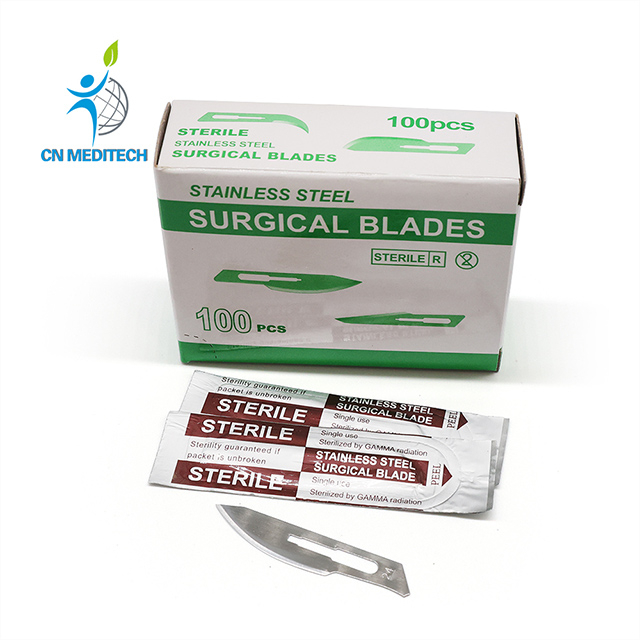
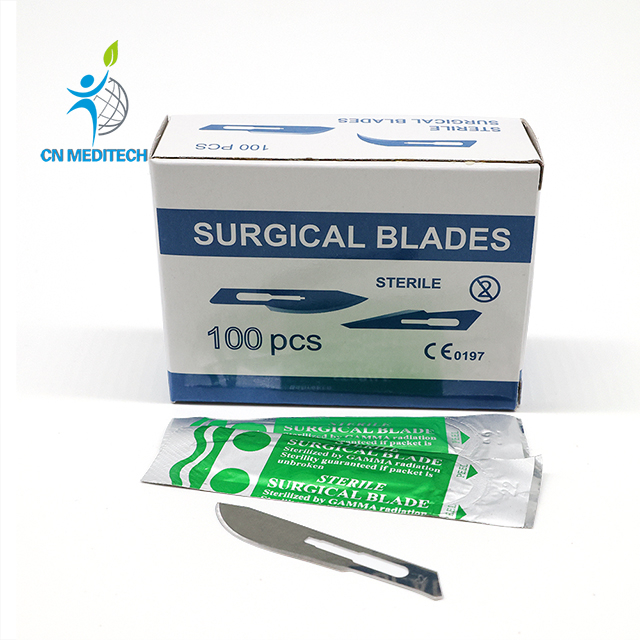
· Scalpel blades: Individual foil-wrapped replacement blades packed in standard dispenser boxes of 100 units.
· Scalpel handles: Precision-crafted reusable stainless steel handles (No. 3, No. 4, No. 7) compliant with surgical reuse standards.
· Different blade sizes: Full spectrum scalpel blade sizes catering to both delicate micro-incision and macro-abdominal surgical procedures.
· Sterile and non-sterile options: Gamma/EtO sterile surgical scalpel units for OR usage alongside non-sterile bulk blades for educational, autopsy, or industrial application.

The operational divide between a fully disposable surgical scalpel and reusable stainless steel handles equipped with replaceable blades represents a primary strategic choice for medical distributors. Align product selection with facility-level budget constraints in Disposable vs Reusable Surgical Scalpel: Which One is Better for Hospitals?
A fully integrated disposable scalpel combines a precision stainless or carbon steel blade permanently molded onto a rigid plastic handle, complete with a protective sheath. This option may be suitable for markets that prioritize:
· Convenient product preparation: Eliminating clinical staff assembly steps and streamlining pre-operative instrument tray setup times by up to 30 seconds per procedure.
· Single-use product supply: Complete elimination of hospital-acquired infection (HAI) cross-contamination risks, addressing safety guidelines that note HAIs affect approximately 7% of hospitalized patients in developed nations and 15% in developing regions (Source: WHO Report on the Burden of Endemic Health Care-Associated Infection Worldwide).
· Sterile packaging: Individual blister pouches validated to maintain sterility over a 5-year shelf life under ambient storage.
· Simplified inventory management: Single SKU tracking that unites handle and blade into one purchase line item.
· Reduced reprocessing requirements: Eradicating the labor, energy, and chemical costs associated with Central Sterile Supply Department (CSSD) autoclaving, which averages $0.80 to $1.25 per instrument cycle (Source: Healthcare Financial Management Association CSSD Cost Analysis).
When selecting disposable surgical scalpels, distributors should evaluate:
· Blade sharpness and consistency: Electronic laser inspection verifying cutting force thresholds under 1.8 Newtons across 100% of production lots.
· Handle design: High-density ABS or polystyrene plastic construction featuring anti-slip lateral ribbing and calibrated mass distribution (averaging 8 to 12 grams total weight).
· Product size: Comprehensive physical scale match corresponding to standard surgical blade profiles.
· Sterilization method: Gamma Irradiation (Cobalt-60) delivering a minimum dose of 25 kGy or Ethylene Oxide (EtO) gas sterilization achieving a Sterility Assurance Level (SAL) of 10⁻⁶ in accordance with ISO 11137-1 and ISO 11135 standards (Source: ISO 11137-1:2025 Sterilization of Health Care Products).
· Individual packaging: High-barrier aluminum foil or medical-grade paper-peel blister pouches preventing moisture ingress (Water Vapor Transmission Rate < 0.1 g/m²/24h).
· Shelf life: Accelerated aging stability study documentation backing 3-year or 5-year expiration dates.
· Carton packing quantity: Master shipper configurations optimized for pallet loading, typically standardized at 10 box units / 1000 individual scalpels per master carton.
The traditional modular system relies on autoclavable stainless steel handles paired with detachable, single-use surgical blades. This approach allows customers to purchase:
· Scalpel handles: Reusable surgical-grade stainless steel (AISI 304 or 420) compliant with ISO 7153-1, engineered to withstand upwards of 1,000 autoclave steam sterilization cycles at 134°C for 3.5 minutes without surface degradation.
· Replacement blades: High-volume consumables featuring precision fitment slots designed according to ISO 7740 standards.
· Different blade sizes: Flexible blade swapping on identical handles, enabling custom tray assembly per specialty.
Understanding clinical applications for distinct surgical scalpel blade sizes is paramount when guiding hospital purchasing committees. Standardized blade dimensions follow universal numbering systems that pair directly with specific handle series.
Common blade configurations may include:
· No. 10: Characterized by a large, curved cutting edge ("belly"). It is the classic incision blade used primarily for large skin and muscle incisions in general surgery, thoracic procedures, and laparotomies. Compatible with No. 3 series handles.
· No. 11: An elongated, triangular blade sharpened along the hypotenuse with a sharp pointed tip. Designed specifically for stab incisions, puncture procedures, arthroscopic portals, incision of abscesses, and arterial cannulation. Compatible with No. 3 series handles.
· No. 12: A small, pointed, crescent-shaped blade sharpened along the inside edge of the curve. Predominantly used in suture removal, ENT procedures (tonsillectomy), oral surgery, and mucogingival incisions. Compatible with No. 3 series handles.
· No. 15: Features a small, delicate curved cutting edge. Ideal for making short, precise incisions in specialized fields such as plastic surgery, dermatological excision, ophthalmic procedures, and pediatric surgery. Compatible with No. 3 series handles.
· No. 20 and other larger blade sizes (No. 21, 22, 23, 24): Scaled-up versions of the No. 10 profile with larger fitment slots designed exclusively for heavy-duty No. 4 series handles. Extensively utilized in orthopedic surgery, trauma cases, post-mortem pathology, and deep tissue dissection.
To avoid tied-up working capital while maintaining 98%+ order fulfillment rates, distributors should structure their warehouse stock into three analytical tiers:
· High-demand products (70% of inventory value): CCore scalpel blade sizes—specifically No. 10, No. 11, No. 15, and No. 22—account for approximately 75% to 80% of total global surgical blade consumption in general hospital settings (Source: Grand View Research: Surgical Blade Market Report 2024 - 2030). Maintain 60 to 90 days of safety stock.
· Project-based products (20% of inventory value): Medium-volume SKUs including No. 12, No. 20, No. 23, disposable safety scalpels, and specialized No. 7 slim long handles. Stocked in 30 to 45 day buffer windows aligned with local private hospital procurement schedules.
· Special-order products (10% of inventory value): Niche clinical tools such as No. 15C, specialized gouging blades, and titanium-coated micro-blades. Managed via back-to-back OEM factory orders with established lead times of 30 to 45 days.

Pricing strategy directly dictates market penetration success. Navigating B2B price tiers requires clear segmentation of client purchasing power and quality expectations. Over-specifying products in tender markets leads to lost bids, while under-specifying in premium markets destroys brand reputation. For a comprehensive review of procurement cost management, consult Common Surgical Scalpel Procurement Mistakes That Increase Costs.
In highly competitive markets, distributors may focus on:
· Cost-effective disposable scalpels: Standardized single-use scalpels constructed with high-grade carbon steel blades and lightweight plastic handles optimized for mass production.
· Standard blade configurations: Concentrating inventory on high-volume SKUs (No. 10, 11, 22) to leverage bulk factory pricing tiers.
· Efficient bulk packaging: Utilizing standard 100-count inner boxes and dense 1000-count master cartons to compress freight volume per unit by up to 18%.
· Competitive MOQ: Manufacturer partner Minimum Order Quantities structured flexibly (e.g., 50 to 100 master cartons per shipment) to optimize cash flow.
· Stable supply: Factory capacity guarantees preventing stockouts during seasonal tender surges.
Some customers may place greater emphasis on:
· Blade material and sharpness: High-carbon Swiss or German stainless steel alloys delivering initial cutting sharpness under 1.5 Newtons and edge stability maintained through multi-cut pass trials.
· Consistent manufacturing quality: Fully automated robotic grinding and micro-vortex polishing yielding zero microscopic burrs under 50x optical magnification inspection.
· Sterile packaging: Premium medical-grade paper (60g/m²) or Tyvek® blister packaging providing pristine peel integrity without fiber tearing.
· Product traceability: Individual lot numbering and barcode laser-etched on blades/handles compliant with GS1 Unique Device Identification (UDI) regulations (Source: US FDA UDI System Regulations).
· Regulatory documentation: Full technical files, biocompatibility testing (ISO 10993 series), and complete sterilization validation reports (Source: ISO 10993-1:2018 Biological Evaluation of Medical Devices).
Many successful distributors benefit from offering different product tiers:
Market Segment | Recommended Product Strategy |
Price-sensitive customers | Cost-effective standard products; carbon steel blades in high-density bulk packaging; focus on minimal unit pricing ($0.03 - $0.05 per blade). |
General hospital supply | Reliable mainstream product range; stainless steel surgical blades and standard disposable scalpels; CE/FDA certified; mid-tier pricing ($0.06 - $0.12 per unit). |
Premium customers | Higher-specification products and packaging; safety scalpels with retractable shields; ultra-sharp Swiss stainless steel; premium blister packs ($0.25 - $0.85 per safety unit). |
Tender projects | Specification-based customized supply; tailored packaging sizes, local language labeling, fixed 2-year contract pricing with dedicated batch production runs. |
Packaging is often underestimated during surgical scalpel procurement. However, packaging requirements can vary significantly between markets. Distributors should consider:
· Individually packed or bulk-packed products: Single-blade peel pouches vs. non-sterile bulk vacuum packs of 100 or 500 units for industrial/re-packaging buyers.
· Sterile or non-sterile supply: Gamma/EtO sterile options for clinical OR use, versus non-sterile blades destined for localized sterilization or non-medical dissection markets.
· Retail packaging requirements: Full-color inner dispenser boxes (100 units/box) featuring hang-tabs, tamper-evident seals, and localized barcode symbology.
· Hospital bulk packaging: Consolidated clinical packs designed for quick-dispensing tray insertion in high-volume operating theaters.
· Local language labeling: Compliance with destination market labeling laws, including multi-language translations (EN, FR, ES, AR, RU) of IFU (Instructions for Use) and warning symbols per ISO 15223-1:2021 (Source: ISO 15223-1:2021 Medical Devices - Symbols to be Used with Labeling).
· Private label packaging: Complete customized print layouts featuring distributor logo, local registration holder details, and custom brand aesthetic.
· Carton dimensions: Standardized double-wall corrugated master cartons (e.g., 450 x 320 x 280 mm, gross weight < 12 kg) designed to prevent crush damage when stacked 5-high on standard pallets.
· Shipping efficiency: Maximizing container loading density; a standard 20-foot GP container accommodates approximately 450 master cartons (450,000 disposable scalpels or 4,500,000 individual blades).

Surgical scalpel may be technically suitable for a market but still face challenges if the required documentation is unavailable. Before importing, distributors should clarify the requirements in their target market, including:
· Product registration requirements: Submission of technical dossiers to local regulatory bodies (e.g., US FDA 510(k), EU MDR CE, Saudi FDA, Brazilian ANVISA, Indian CDSCO).
· Quality system documentation: Manufacturer ISO 13485:2016 certificate issued by an accredited Notified Body (e.g., TÜV, SGS, BSI).
· Product specifications: Material test reports verifying steel chemical composition (C, Cr, Mn content) per ISO 7153-1 and hardness ratings between 50 to 58 HRC (Rockwell Hardness C scale).
· Sterilization information: ISO 11137 (Radiation) or ISO 11135 (EtO) sterilization batch certificates, dosage release records, and residual gas analysis reports (< 4 mg/device EtO residual limit).
· Product labeling: UDI compliant barcode layout, lot tracking numbers, manufacturing date, and clear hourglass expiration symbols.
· Certificates required by local authorities: Free Sale Certificates (FSC) or Certificates of Pharmaceutical Product (CPP) issued by the government health authority of the country of origin.
· Tender documentation: Certified laboratory test reports covering blade keenness retention, tensile strength, and corrosion resistance under salt spray testing (ASTM B117 standards).
When evaluating a surgical scalpel supplier, consider the following:
A flexible supplier may help distributors source:
· Disposable surgical scalpels: Standard plastic-handle scalpels, safety scalpels with retractable blade guards, and specialized micro-scalpels.
· Scalpel blades: Carbon steel and stainless steel options spanning all international sizes from No. 10 through No. 36.
· Scalpel handles: Premium stainless steel handles including No. 3, No. 4, No. 7, round handles, and specialized graduated scale handles.
· Different blade sizes: Full spectrum standard and specialized curved/pointed blade geometries.
· Different packaging configurations: Foil packs, blister packs, 10-count unit packs, 100-count dispenser boxes, and private label master packaging.
Possible OEM support may include:
· Customized packaging: Tailored artwork, color profiles, and localized brand typography on inner boxes and shipping cartons.
· Private-label printing: Direct laser etching of distributor brand names, logos, or catalog numbers onto stainless steel scalpel handles or disposable handle bodies.
· Product branding: Developing proprietary retail display boxes and promotional marketing materials for regional distribution sales teams.
· Customized product configurations: Specialized blade-handle combinations, specialized sterilization indicator strips, or custom tray kit integration.
Modern medical distribution demands flexible logistics options. Top-tier manufacturers support diverse Incoterms (EXW, FOB, CFR, CIF, DDP) and accommodate combined container shipments pairing scalpels with complementary surgical disposables (e.g., surgical drapes, sutures, gloves) to optimize shipping spend.
Distributors should evaluate:
· Production consistency: Fully automated manufacturing plants boasting annual capacities of 100 million+ blades to cushion against demand spikes.
· MOQ requirements: Scalable minimum order volumes that accommodate emerging regional distributors (e.g., 10,000 units per size) while supporting tender orders in the millions.
· Lead times: Standard production turnarounds maintained within 20 to 30 days from order confirmation and deposit receipt.
· Packaging stability: Heavy-duty export packaging standards that withstand long-distance maritime transport and tropical humidity.
· Repeat-order capability: Guaranteed lot-to-lot color matching, dimensional fitment, and steel alloy consistency across years of continuous ordering.

Choosing surgical scalpels for different distributor markets requires more than comparing product prices.
Distributors should evaluate:
· Who their target customers are
· Whether the market prefers disposable or reusable products
· Which scalpel blade sizes have stable demand
· The expected market price level
· Packaging requirements
· Regulatory and documentation needs
· Tender opportunities
· Supplier support capabilities
A well-planned surgical scalpel portfolio can help distributors reduce unnecessary inventory, respond to more customer inquiries, and build a stronger long-term position in their local market.
The right surgical scalpel is not simply the product with the lowest price or the most features. It is the product that best matches the distributor's market.
A: The "best" surgical scalpel depends directly on your market segment. For public hospital tenders and infection-control-focused facilities, single-use disposable surgical scalpels with stainless steel blades offer the highest turnover and lowest liability. For price-sensitive regional networks or established central sterilization systems, stocking carbon steel scalpel blades paired with reusable stainless steel scalpel handles provides the most competitive cost-per-procedure profile.
A: A balanced distribution strategy includes both. Disposable scalpels are rapidly expanding due to stringent WHO anti-cross-contamination guidelines and CSSD cost pressures, making them ideal for emergency departments, outpatient surgery centers, and premium private hospitals. Reusable handles with replaceable blades remain a staple in budget-conscious public hospitals and educational facilities. Offering both options allows distributors to address 100% of their local market opportunities.
A: Distributors should focus approximately 75% to 80% of their initial inventory investment on primary demand scalpel blade sizes: No. 10 (general surgery), No. 11 (stab incisions/arthroscopy), No. 15 (delicate/plastic surgery), and No. 22 (large abdominal/orthopedic procedures). Secondary sizes like No. 12, No. 20, and No. 23 should be stocked in lower volumes based on specific hospital specialty contracts.
A: Yes. Professional medical device manufacturers like CN MEDITECH provide full OEM and Private Label services. This includes custom laser etching of your brand logo on reusable scalpel handles, customized artwork design for inner foil pouches and dispenser boxes, multi-language labeling compliant with ISO 15223-1, and complete technical dossier support for registering your brand with local health authorities.
A: Consolidating your procurement with a single, highly certified manufacturer provides significant operational advantages. Working with an integrated supplier yields lower shipping costs through container consolidation, volume-tiered pricing discounts, streamlined regulatory registration (managing one set of technical files instead of many), and consistent product fitment guarantees between scalpel blade sizes and handles under ISO 7740 standards.
CN MEDITECH is a leading Chinese medical consumables manufacturer established in 2014, specializing in surgical instruments, medical disposables, and wound care solutions. Operating under ISO 13485:2016 quality systems with CE and FDA certifications, the company exports certified products to over 60 countries across Europe, the Americas, the Middle East, and Southeast Asia.
Partner with CN MEDITECH to elevate your medical distribution business with certified, high-precision surgical scalpels and flexible OEM private label solutions. Contact our international sales team today to request product samples, factory-direct quotes, and technical tender dossiers.
1.Grand View Research. (2024-2030). Surgical Blade Market Size And Share Report.
2.International Organization for Standardization. (2016). ISO 7153-1:2016 Surgical instruments — Materials — Part 1: Metals.
3.European Parliament & Council. (2017). Regulation (EU) 2017/745 on Medical Devices (EU MDR).
4.International Organization for Standardization. (2019). ISO 11607-1:2019 Packaging for terminally sterilized medical devices.
5.International Organization for Standardization. (1985). ISO 7740:1985 Instruments for surgery — Handles and scalpels.
6.World Health Organization. (2011). Report on the Burden of Endemic Health Care-Associated Infection Worldwide.
7.International Organization for Standardization. (2025). ISO 11137-1:2025 Sterilization of health care products — Radiation.