- All
- Product Name
- Product Keyword
- Product Model
- Product Summary
- Product Description
- Multi Field Search
- Home
- About Us
- Products
- Customer Services
- MEDICAL INFOR
- Contact Us

Views: 0 Author: Site Editor Publish Time: 2026-08-27 Origin: Site


By CN MEDITECH | Medical Consumables Manufacturing & Specialists
CN MEDITECH is a certified medical consumables manufacturer serving hospitals, distributors, and procurement teams across 60+ countries. Our team combines clinical expertise and supply chain experience to support evidence-based procurement decisions.
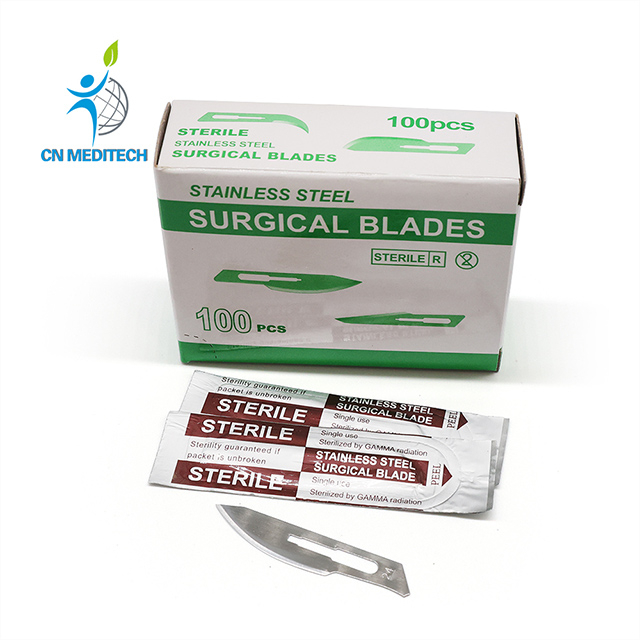
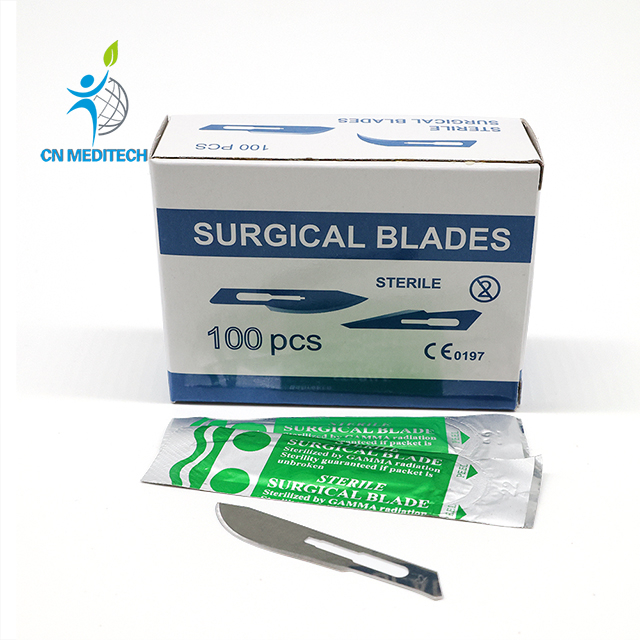
Hospitals, clinics, surgical centers, and medical distributors often keep multiple scalpel blade sizes in stock to cover different surgical applications. Having more options can seem like a way to avoid shortages, but there is a procurement downside: every additional blade size can create another SKU to purchase, store, monitor, and replenish.
The issue is not whether a hospital needs different scalpel blade sizes. The real question is how many sizes actually need to be kept in regular inventory.
For buyers managing surgical consumables, optimizing the blade size mix can help reduce slow-moving stock, simplify purchasing, and improve inventory turnover without limiting access to commonly required blades.
Each additional scalpel blade size can increase the number of SKUs that a purchasing department needs to manage.
For example, instead of purchasing one or two frequently used sizes in larger quantities, a buyer may spread the same purchasing budget across many blade numbers. Some sizes may be used every week, while others may remain in storage for months.
This creates several potential costs:
· More SKUs to track: Each individual scalpel blade number demands distinct tracking within the enterprise resource planning (ERP) system, warehouse management software (WMS), and central sterile supply department (CSSD) inventory catalog.
· More purchase orders and replenishment decisions: Procurement specialists spend disproportionate administrative hours issuing separate purchase orders, verifying minimum order quantities (MOQs), tracking shipments, and conducting invoice reconciliations for low-volume specialty blade sizes.
· Higher warehouse space requirements: Dedicated physical bin locations, safety stock storage, and climate-controlled cleanroom shelving are consumed by secondary or tertiary surgical blade sizes that generate negligible throughput.
· Greater risk of slow-moving inventory: Non-core scalpel blades frequently sit on warehouse shelves for months or years, binding working capital that could otherwise be allocated to high-turnover medical consumables.
· More complicated stock forecasting: Highly fragmented demand across a broad spectrum of scalpel blade numbers and uses makes historical consumption modeling unreliable, leading to erratic ordering patterns and inaccurate safety stock calculations.
· Higher risk of expired or outdated stock: Sterile medical devices carry strict shelf-life limitations (typically 5 years under ISO 11607 packaging standards). Infrequently used sizes inevitably pass their sterility expiration dates, forcing costly regulatory disposal and inventory write-offs.
· Lower purchasing efficiency for low-demand sizes: Fragmenting total surgical blade purchase volume across dozens of niche SKUs prevents buyers from achieving tier-one volume discounts, increasing the average unit purchase price across the entire category.
Therefore, the objective should not simply be to stock more scalpel blade sizes. It should be to maintain the right combination of commonly used sizes and application-specific options.
Clinical & Standard Reference Note: According to ISO 7740:1985 (Instruments for surgery — Scalpels with detachable blades — Fitting dimensions) and BS EN 27740, surgical blades are strictly standardized into specific fitment geometry to pair with corresponding handles. Unregulated SKU addition without standardization alignment breaches lean healthcare supply chain principles defined in the ISO 9001:2015 quality management framework.
It is tempting for medical purchasing committees and surgical supply distributors to maintain complete catalog availability. However, empirical consumption analysis across regional trauma centers and multi-specialty hospitals reveals an extreme Pareto distribution (the 80/20 rule) in blade usage.
In standard surgical operations, a small subset—primarily the most common scalpel blade size options—accounts for over 80% to 85% of total surgical procedure consumption. Conversely, secondary blade sizes represent a fragmented tail of intermittent demand.
· High-demand sizes → frequent stock replenishment: Standard sizes (such as No. 10, No. 11, and No. 15) experience high, predictable velocity, yielding rapid inventory turnover and lower per-unit holding costs.
· Low-demand sizes → slow inventory turnover: Niche sizes (such as No. 12 or specialty deep-tissue blades) experience long dwell times on shelves, absorbing storage overhead while generating zero cash flow.
Attempting to treat all catalog sizes with identical safety stock metrics inevitably leads to excessive total inventory depth, capital tied up in slow-turnover goods, and heightened operational risk. For a detailed guide on matching surgical blades to clinical procedures and understanding size breakdowns, refer to our technical analysis on scalpel blade sizes explained: choosing the right blade for every procedure.

To eliminate unnecessary SKUs, healthcare procurement teams and hospital central purchasing departments must perform a rigorous retrospective audit of actual clinical consumption across all operating rooms, outpatient clinics, and laboratory units.
Useful questions include:
· Which blade sizes are ordered most frequently? (Identifying high-volume core consumables).
· Which sizes are used across multiple departments? (Determining cross-departmental standardization candidates).
· Which sizes have experienced stockouts? (Highlighting safety stock vulnerabilities or supply chain bottlenecks).
· Which sizes remain in storage for long periods? (Pinpointing stagnant working capital and obsolete SKUs).
· Are some sizes purchased only for occasional procedures? (Evaluating feasibility for kit-based or on-demand procurement).
· Does each size have a clear clinical or operational requirement? (Eliminating duplicate blade sizes that serve identical surgical functions).
· Can frequently used sizes be consolidated into larger-volume purchases? (Unlocking maximum tier-based quantity discounts).
This systematic auditing approach allows procurement teams to separate scalpel blade sizes and uses into three practical inventory management categories:
These represent the core clinical workhorses—predominantly the most common scalpel blade size selections such as No. 10 (general abdominal incisions), No. 11 (stab incisions, arterial lines, laparoscopic port entries), No. 15 (precise plastic and pediatric surgery), and No. 20/22 (large thoracic and orthopedic surgical incisions). These high-velocity SKUs should be maintained with robust buffer stock, automated reorder triggers, and high-volume contract pricing.
These are highly specialized blades tailored for specific surgical disciplines, such as specialized curved No. 12 blades utilized in ENT (tonsillectomies) or mucogingival dental surgeries, or delicate No. 67 mini-blades used in ophthalmic microsurgery. These items should be managed via targeted, low-buffer inventory protocols or integrated directly into custom surgical procedure trays (CPTs).
These consist of rarely requested blade geometries, historical legacy orders, or non-standard sizes that overlap functionally with mainstream options. SKUs in this category should be targeted for complete clinical phase-out, consolidated into primary blade equivalents, or ordered exclusively on a non-stocked, project-based procurement schedule.
A frequent error in medical procurement is evaluating surgical blades as isolated items without considering their mechanical interface with reusable or disposable scalpel handles. The physical fitment between a blade and handle is governed by strict medical device standards (ISO 7740 / ASTM F1078 standards for surgical instruments).
This means a purchasing team should evaluate:
Blade size → Blade number → Handle compatibility → Intended application → Actual demand
If a purchasing department stocks five different scalpel blade sizes that all fit a standard No. 3 handle, but 90% of operating room procedures utilize only No. 10 and No. 15, stocking the remaining three sizes forces surgical suites to maintain excess handle stock and creates unnecessary assembly confusion during instrument tray preparation. Ensuring harmonized standardization prevents clinical friction and reduces physical inventory overhead. For insights on evaluating blade materials and structural integrity prior to contract execution, review our guide on how to evaluate surgical scalpel quality before bulk purchasing.
The administrative and economic burden of unrationalized inventory extends far beyond the surface purchase price of the physical box of blades. Procurement professionals refer to this as the Total Cost of Ownership (TCO) escalation.
This can lead to:
More blade sizes → More SKUs → Smaller quantities per SKU → Slower turnover → Higher inventory management cost
When procurement officers divide purchasing power across dozens of small order lines, they lose significant volume leverage with surgical blade manufacturers. Furthermore, receiving, inspecting (in compliance with ISO 2859-1 sampling procedures), logging, and stocking twenty distinct SKU boxes requires quadrupled labor hours compared to managing five consolidated, high-volume SKU lines. To understand how improper procurement planning impacts overall operational expenditure, consult our research on common surgical scalpel procurement mistakes that increase costs.

To eliminate supply chain inefficiency, hospital material managers, medical laboratory purchasing heads, and surgical distributors should adopt structured, lean inventory methodologies.
Establish high-velocity core inventory protocols for core scalpel blade sizes (e.g., No. 10, 11, 15, and 22). Maintain fixed safety stock levels backed by automated reorder systems tied directly to real-time hospital operating room usage. Focus contractual pricing negotiations on these primary SKUs to achieve maximum economies of scale.
For low-frequency scalpel blade numbers that are nonetheless clinically necessary for specialized surgical sub-disciplines, institute tight reorder thresholds and low maximum stock levels. Avoid purchasing large bulk master cartons for niche sizes that carry high risks of sterility expiration prior to utilization.
Work with forward-thinking medical manufacturers that support consolidated shipment models. Instead of requiring full container loads or full master carton purchases per single SKU, buyers should leverage suppliers that allow multi-size mixed-carton ordering. This practice enables hospitals and regional distributors to maintain a full service spectrum without inflating overall inventory volume.
Select manufacturing partners capable of providing dynamic supply arrangements, such as vendor-managed inventory (VMI), blanket purchase orders with scheduled releases, and rapid lead-time manufacturing replenishment. Flexible supply chains mitigate stockout risks while minimizing holding capital.
When issuing tenders, evaluating new OEM partners, or conducting vendor qualification reviews, hospital procurement committees and medical distributors must ask rigorous, targeted questions:
· What scalpel blade sizes are available? (Verify complete catalog breadth across carbon steel and stainless steel formulations conforming to BS 2982 / ISO 7740 standards).
· Which blade numbers are most commonly supplied? (Benchmark supplier production volume against global demand trends).
· Which handles are compatible with each blade? (Ensure seamless integration with existing hospital reusable instrument inventories).
· Can you include different sizes in one order? (Assess vendor flexibility for mixed SKU consolidated shipments).
· What are the MOQ requirements for each size? (Determine flexibility for low-demand, specialized surgical blade sizes).
· Can packaging be customized? (Confirm compliance with medical-grade sterile unit packaging, foil peelability, and barcode labeling).
· Is OEM service available? (Evaluate private-label manufacturing capabilities for regional brand distribution).
· Can the supplier support private-label products? (Review custom brand printing, box design, and multi-lingual IFU insertion).
· Can documentation be provided for hospital or tender requirements? (Verify availability of CE Certificates, ISO 13485 registration, Declaration of Conformity, FDA 510(k) clearance, and sterile audit reports).
· Can the supplier maintain stable supply for repeat orders? (Analyze raw material supply security, such as high-grade Swedish carbon steel or surgical stainless steel strips).
· Can the supplier support distributor-level purchasing? (Inquire regarding tiered volume pricing, regional exclusivity options, and marketing support).
These questions help buyers evaluate the total procurement value, rather than comparing only the price per blade.

For buyers who need multiple scalpel blade sizes, CN MEDITECH can help build a supply solution around actual purchasing requirements rather than simply offering a long product list.
We can support hospital procurement, medical distributors, surgical supply companies, and tender projects with different scalpel blade configurations and bulk supply arrangements.
Depending on project requirements, support can include:
· Multiple scalpel blade sizes: Full spectrum production of precision carbon steel and stainless steel surgical blades manufactured to ultra-tight mechanical tolerances (conforming to BS 2982 and ISO 7740).
· Bulk purchasing: Highly competitive direct-from-factory volume pricing structures optimized for large hospital networks and national healthcare tenders.
· Distributor supply: Structured distributor partnerships offering reliable lead times, protected territories, and commercial margin growth.
· OEM and private-label solutions: Comprehensive turnkey private labeling, including customized primary foil blister packs, inner dispenser boxes, and outer shipping cartons.
· Customized packaging: Custom unit counts, specialty medical paper-foil sterile barrier packaging, and localized barcode/GS1 DataMatrix encoding.
· Mixed-product sourcing: Flexible ordering capabilities allowing clients to combine a comprehensive scalpel blade size chart of diverse blade numbers and matching handles into single consolidated shipments.
· Tender documentation support: Immediate provision of complete regulatory dossiers, sterile validation reports (gamma irradiation / EO gas), free sale certificates, and compliance certification for institutional bidding.
· Project-based procurement: Customized supply agreements engineered specifically for hospital construction projects, emergency relief programs, and specialized surgical kit assemblers.
· Long-term repeat supply: Rigorous quality assurance protocols guaranteeing batch-to-batch sharpness consistency, corrosion resistance, and reliable multi-year contract delivery.
Instead of asking “How many blade sizes can we offer?”, a better procurement question is:
“Which scalpel blade sizes should we keep in stock, and which ones can be supplied when required?”
That distinction can make a significant difference to inventory efficiency.
Most general hospitals can satisfy over 85% to 90% of clinical surgical needs by maintaining a core standard inventory of 4 to 6 primary scalpel blade sizes (typically No. 10, No. 11, No. 15, and No. 22 or 23). Specialized sub-disciplines (e.g., ophthalmology, ENT, or micro-dermatology) should maintain controlled, low-stock allocations of specialized secondary blades rather than stocking full catalog ranges across all central supply rooms.
The most common scalpel blade size selections worldwide are No. 10 (standard general surgical incisions), No. 11 (sharp angular tip for stab incisions, catheter insertion, and drainage), No. 15 (small curved cutting edge for precise aesthetic, pediatric, and delicate incisions), and No. 20/22 (large rounded blades for major abdominal and orthopedic surgery).
Procurement managers should conduct a 12-month historical consumption audit using hospital ERP data. Categorize scalpel blade numbers into high-velocity core items, procedure-specific necessity items, and slow-moving items. Cross-reference usage with handle compatibility and survey surgical department heads to eliminate redundant SKUs that offer no distinct clinical advantage.
No. Medical distributors should focus core warehouse stocking on high-turnover SKUs while partnering with a flexible manufacturer like CN MEDITECH that offers low-MOQ mixed-carton fulfillment and rapid lead times for low-demand sizes. This minimizes working capital tie-up while preserving the ability to fulfill full-spectrum customer orders promptly.