- All
- Product Name
- Product Keyword
- Product Model
- Product Summary
- Product Description
- Multi Field Search
- Home
- About Us
- Products
- Customer Services
- MEDICAL INFOR
- Contact Us

Views: 0 Author: Site Editor Publish Time: 2026-08-14 Origin: Site


By CN MEDITECH | Medical Consumables Manufacturing & Specialists
CN MEDITECH is a certified medical consumables manufacturer serving hospitals, distributors, and procurement teams across 60+ countries. Our team combines clinical expertise and supply chain experience to support evidence-based procurement decisions.
When procurement officers, medical distributors, and tender managers initiate high-volume procurement for a surgical scalpel, initial commercial evaluations frequently center on three primary parameters:
· Unit price
· MOQ (Minimum Order Quantity)
· Delivery time
While these commercial terms dictate immediate budgetary feasibility, they represent only a fraction of the total cost of ownership in medical device supply chain management. In large-scale hospital supply and international distribution, post-delivery product consistency and clinical safety ultimately govern long-term profitability and institutional reputation.
The true operational cost of bulk purchasing is heavily impacted by critical quality variables that cannot be evaluated through price quotes alone:
· Blade consistency: Uniform sharpness, grinding bevel precision, and dimensional tolerances across tens of thousands of units.
· Sterility reliability: Validated sterilization processes delivering a verified Sterility Assurance Level (SAL 10-6).
· Packaging quality: High-barrier packaging engineered to survive oceanic freight, high humidity, atmospheric pressure changes, and physical handling.
· Supplier quality control: Comprehensive factory-level Quality Management Systems (QMS) compliant with international regulatory standards.
· Batch stability: Zero variance in metallurgical and physical performance between consecutive manufacturing lots.
For hospital purchasing boards, healthcare ministries, and medical device distributors, receiving a bulk lot of non-conforming or inconsistent surgical scalpel blades introduces severe systemic risks:
· Complaints from end users (surgeons, nurses, and operating theater directors)
· Product replacement costs and administrative overhead
· Delayed hospital supply disrupting elective and emergency surgical schedules
· Failed tender delivery accompanied by contractual financial penalties and loss of licensure
To mitigate these supply chain risks, establishing a standardized, technical quality evaluation protocol prior to selecting a permanent surgical scalpel supplier is essential.
A technical procurement evaluation must move beyond elementary material definitions and focus on practical engineering verification points. A hand-picked pre-production sample does not guarantee stable mass production; procurement managers must systematically audit raw material specifications and manufacturing repeatability.
The foundation of any premium surgical instrument lies in its metallurgical composition. High-grade surgical scalpel blades require consistent steel purity, corrosion resistance, stable Rockwell hardness (HRC), and reliable cutting edge endurance. In global healthcare procurement, buyers typically evaluate two primary material specifications:
* Stainless Steel Blade (Grade 420 / CROMO): Formulated according to international standards such as ISO 7153-1 (Surgical instruments — Materials). Stainless steel offers superior resistance to oxidation and chemical corrosion, making it ideal for environments with humid storage conditions or extended transit times. It maintains optimal edge retention while maintaining structural ductility (typically 50–55 HRC).
* Carbon Steel Blade (Grade 1095 / High Carbon): Manufactured in accordance with BS 2982 specifications. Carbon steel enables an exceptionally fine, ultra-sharp cutting edge due to its tight carbide grain structure, achieving higher hardness levels (typically 55–60 HRC). However, carbon steel requires pristine, moisture-free sterile packaging to prevent micro-corrosion during shelf life.
Procurement officers must demand full transparency regarding the surgical blade material. Always require the supplier to provide:
· Material specification sheets detailing chemical composition tolerances
· Supplier quality records and raw material mill test certificates (MTC)
· Batch consistency logs proving chemical stability across raw material heats
Understanding how material selection directly impacts edge degradation is vital for inventory planning; for a deeper technical breakdown, review our analysis on why some surgical scalpels lose sharpness faster than others.
High-volume manufacturing of a surgical scalpel blade requires high-speed precision stamping, computer-controlled heat treatment, and automated multi-stage grinding. During bulk evaluation, procurement teams must verify four primary physical inspection points:
· Blade edge consistency: Absence of micro-burrs, feathering, or grinding chatter marks when inspected under 40x optical magnification.
· Surface finishing: Smooth, mirror-like or uniform satin finish devoid of pitting, heat-treatment scale, or chemical residues.
· Blade geometry: Strict compliance with standard keyhole slot dimensions, spine thickness profiles, and tang angles according to ISO 7740.
· Defect control: Statistical process control (SPC) metrics guaranteeing Acceptable Quality Limits (AQL 0.65 or tighter).
Crucial Procurement Principle: A good sample does not always represent stable bulk production.
To guarantee bulk consistency, buyers should explicitly mandate:
· Sample evaluation pulled directly from active automated production runs (not hand-finished prototype runs)
· Batch inspection report (Certificate of Analysis / COA) with each lot
· Production quality control process mapping, including automated inline vision system inspections

Sharpness in surgical cutlery is not merely a subjective preference—it directly dictates incision precision, tissue trauma, and patient healing outcomes. Quantitative sharpness testing must be conducted before issuing commercial approval.
Before placing a large order, buyers should evaluate:
Procurement specialists must verify whether cutting force requirements remain identical across multiple samples within the same box and between different production batches:
· Is the blade sharpness consistent between samples?
· Are there measurable performance differences between batches?
Leading manufacturers utilize automated penetration testing equipment measuring peak force (in Newtons) required to slice standardized synthetic skin membranes (such as polyurethane or silicone sheet). Cutting force profiles should display minimal variance (standard deviation < 5%) across test samples.
Under microscopic inspection, verify that the cutting edge is free from structural defects:
· Damaged edges caused by mechanical contact during post-grinding handling
· Uneven grinding bevel angles or asymmetrical primary/secondary edge facets
· Visible defects such as micro-cracks or stress fractures caused by improper quenching during heat treatment
Clinical research on surgical instrument metallurgy confirms that edge dullness and micro-burrs significantly increase tissue drag and cellular tearing during incisions (Liu et al., Open Journal of Applied Sciences). High-precision grinding directly minimizes intraoperative tissue resistance.
When evaluating a pre-assembled disposable surgical scalpel (consisting of a plastic handle with an integrated surgical blade) or a standalone disposable scalpel unit, structural stability under operational stress is paramount:
· Blade and handle connection: Ultrasonic welding or mechanical staking between the blade tang and plastic handle must withstand axial pull-off forces exceeding 60 N.
· Stability during operation: The handle polymer (typically high-impact ABS or polystyrene) must not bend or flex excessively under lateral tissue force.
· No looseness during use: Zero wobbling or micro-displacement within the handle slot during deep tissue dissection.
Procurement Recommendation: Professional surgical scalpel suppliers should routinely provide production-line sample lots specifically for mechanical bench testing and clinical trial evaluation prior to full-scale manufacturing.
For any sterile surgical scalpel or scalpel sterile disposable system, the sterile barrier packaging is as critical as the cutting steel itself. Compromised packaging invalidates product safety and exposes healthcare facilities to severe surgical site infection (SSI) risks.
Procurement buyers must review complete sterilization validation documentation matching international standards:
· Sterilization Method: Confirm whether the supplier utilizes Gamma Radiation sterilization (ISO 11137-1/2, typically Cobalt-60 at a minimum dose of 25 kGy) or Ethylene Oxide gas sterilization (ISO 11135).
· Sterilization Validation: Review initial validation dossiers proving a verified Sterility Assurance Level of 10-6 (1 unsterile unit in 1,000,000).
· Expiry Date & Stability: Verify real-time and accelerated aging test reports supporting a 3-year to 5-year shelf life claim.
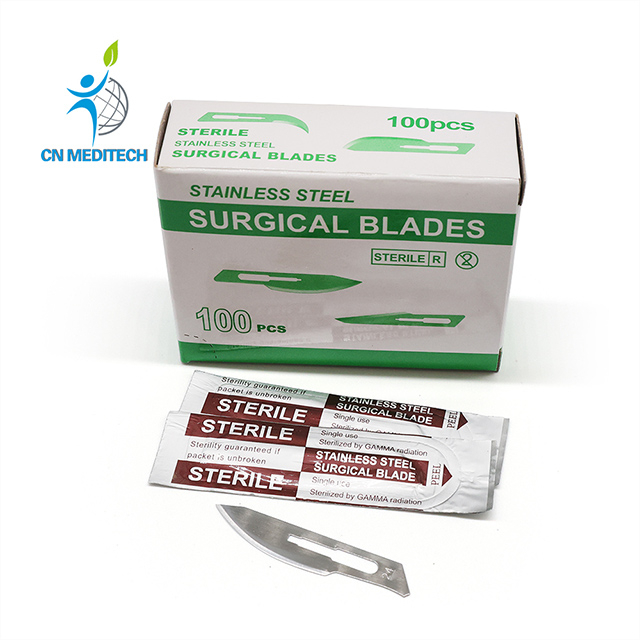
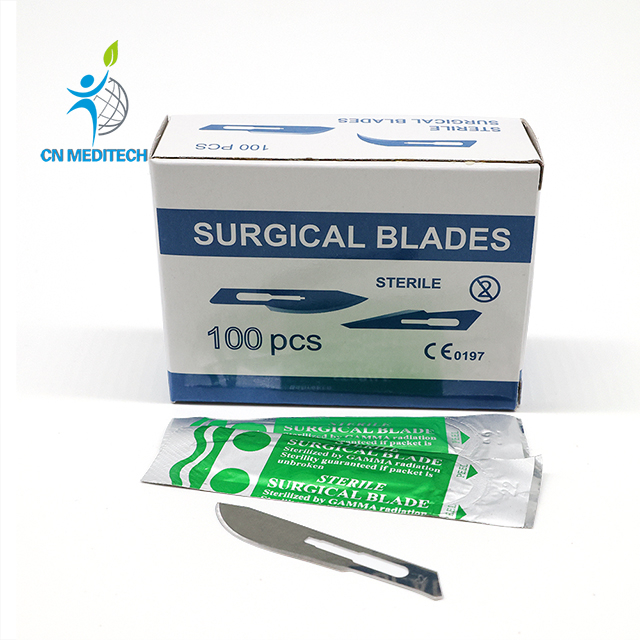
Individual sterile packaging (aluminum foil peel-packs or medical-grade paper/plastic blister pouches) must be thoroughly audited:
· Individual sterile packaging: High-barrier materials preventing gas and moisture transmission.
· Sealing quality: Continuous, uniform heat seals compliant with ISO 11607-1 and ISO 11607-2 (Packaging for terminally sterilized medical devices).
· Package integrity: Clean peeling characteristics without fiber tear (which could pollute the sterile field) and resistance to channel leaks under bubble emissions/dye penetration testing (ASTM F1929).
· Labeling information: Full adherence to ISO 15223-1 symbols, clear batch/lot numbers, manufacturing and expiration dates, sterilization indicators, single-use graphic symbols, and Unique Device Identification (UDI) barcoding.
During long-distance ocean transit, medical cargo encounters high ambient humidity, rapid temperature swings, and rough physical shocks. Moisture, damage, and improper sealing immediately degrade product integrity, leading to rusting of carbon steel blades or loss of package sterility.

From an enterprise Stock Keeping Unit (SKU) management perspective, distributors and hospital purchasing syndicates must select suppliers offering comprehensive product ranges matching diverse surgical disciplines.
Bulk purchasers must confirm size availability, manufacturing tolerances, and packaging options across both small-fit (Fit Handle #3) and large-fit (Fit Handle #4) blade series:
· No. 10 Blade: Curved cutting edge used for general soft tissue incisions.
· No. 11 Blade: Elongated triangular blade designed for stab incisions, catheter placements, and fluid drainage.
· No. 15 Blade: Small, precise curved edge ideal for plastic surgery, dermatology, and delicate pediatric procedures.
· No. 20 & No. 22 Blades: Larger curved blades designed for deep thoracic, orthopedic, and abdominal tissue dissection.
For a comprehensive clinical comparison across all blade dimensions and handle series, read our definitive reference guide on scalpel blade sizes explained: choosing the right blade for every procedure.
For detachable surgical scalpel blades, strict compliance with ISO 7740 fitting dimensions is non-negotiable. An improperly dimensioned slot keyhole will either fail to mount on standard reusable surgical handles or lock loosely, creating severe risks during surgery.
To determine whether your facility should stock detachable blades or fully integrated single-use scalpels, review our hospital procurement guide on disposable vs. reusable surgical scalpels: which one is better for hospitals?
For international distributors, regional hospital requirements vary significantly. Therefore, a professional surgical scalpel supplier must actively support:
· Multiple specifications across stainless and carbon steel grades
· Customized packaging configurations (e.g., 100 pcs/box, 500 pcs/case)
· Private labeling (OEM) with localized language inserts and custom UDI barcodes
To evaluate whether a manufacturer can consistently execute large orders, buyers must audit the supplier's organizational infrastructure and regulatory credentials.
A Professional Supplier Should Provide:
Product Specification Sheets: Detailed dimensional engineering drawings and material data sheets.
· Quality Inspection Documents: Batch-specific Certificates of Analysis (COA) and in-process QC inspection logs.
· Sterilization Records: Official dosage mapping reports and batch sterilization processing certificates.
· Certificates Required by Market: ISO 13485:2016 QMS certification, EU MDR CE Certificates, US FDA 510(k) clearance / establishment registration, and Free Sale Certificates (FSC).
Monthly Capacity: High-volume automated stamping and grinding lines capable of absorbing sudden surge orders without extending lead times.
· Lead Time Predictability: Established raw material reserves ensuring stable manufacturing schedules.
· Quality Inspection Process: In-house ISO Class 8 (Class 100,000) cleanrooms for automated pouch packing and heat sealing.
· Batch Traceability: Full traceability linking raw steel heat numbers directly to final sealed master shipping cartons.
For brand owners, healthcare tenders, and regional distributors:
· OEM packaging design alignment
· Logo customization on handles and display boxes
· Customized labels meeting local government medical device registration laws
· Special requirements handling (e.g., custom blade geometries or custom tray configurations)

The critical question for procurement directors planning multi-year contracts is always: "Will the tenth container shipment maintain the exact quality and schedule of the first container?"
Long-term procurement security requires:
· Consistent quality between orders: Automated manufacturing lines utilizing statistical process control to prevent quality drift.
· Stable raw material supply: Strategic partnerships with accredited medical-grade steel mills to hedge against global steel shortages.
· Predictable lead time: Transparent production scheduling with agreed-upon key performance indicators (KPIs).
International medical trade requires specialized export logistics capabilities:
· Export experience: Familiarity with global customs clearance regulations and medical import documentation.
· Packaging for international shipping: Heavy-duty 5-ply corrugated export master cartons with inner poly-bag moisture protection and palletized shrink-wrapping.
· Documentation support: Timely issuance of Bills of Lading, Certificates of Origin (Form E/Form F/CO), Packing Lists, and legalization/consular attestations.
Answer: Before placing a commercial order, request:
(1) ISO 13485 certificate,
(2) CE Certificate / FDA Registration,
(3) Material Test Certificate (MTC) for steel grade,
(4) Gamma/EtO Sterilization Validation Report according to ISO 11137/11135,
(5) Technical Product Data Sheet specifying ISO 7740 fitting compliance,
(6) Certificate of Analysis (COA) for the specific production lot.
Answer: Request pre-production production-line samples. Perform a three-step evaluation: First, inspect the blade edge under 40x magnification for micro-burrs and edge alignment. Second, execute penetration force tests on synthetic skin/polyurethane sheets to verify sharpness and cutting consistency. Third, test lock-in fitment on standard stainless handles (or test handle pull-off force for disposable scalpels) and perform seal-integrity bubble/dye tests on the sterile foil pouch.
Answer: Yes, qualified manufacturers like CN MEDITECH offer complete OEM/private label services. This includes customized primary peel-pouch printing, custom-branded inner display boxes, multi-language instructions for use (IFU), specialized barcode formats (GS1 DataMatrix/UDI), and custom shipping master cartons designed to meet local distributor regulations.
Answer: Wholesale distributors must balance competitive surgical scalpel price structures with strict regulatory compliance, SKU variety (covering sizes #10 through #25), long shelf-life guarantee (3-5 years), batch traceability, consistent lead times, and robust outer packaging designed to survive multi-modal international freight without compromising pouch seals.

When executing high-volume procurement for a surgical scalpel, unit price is merely one factor in a complex commercial equation. Prioritizing low initial purchase prices at the expense of manufacturing rigor frequently results in hidden costs—including high defect rates, compromised sterility, end-user dissatisfaction, damaged institutional reputation, and potential tender default.
A reliable surgical scalpel supplier should consistently deliver:
✔ Blade consistency: Precision-engineered cutting edges delivering uniform clinical performance.
✔ Sterility reliability: Validated sterilization systems paired with high-barrier packaging.
✔ Packaging quality: Durable primary and secondary packaging designed for international transit.
✔ Supplier QC system: Comprehensive ISO 13485 QMS with lot-level batch traceability.
✔ Long-term supply capability: Predictable lead times, flexible ordering options, full OEM support, and complete documentation.
For hospital procurement boards, healthcare distributors, and international medical supply syndicates, choosing the right manufacturing partner is far more valuable than a one-time price discount.