- All
- Product Name
- Product Keyword
- Product Model
- Product Summary
- Product Description
- Multi Field Search
- Home
- About Us
- Products
- Customer Services
- MEDICAL INFOR
- Contact Us

Views: 0 Author: Site Editor Publish Time: 2026-07-24 Origin: Site


By CN MEDITECH | Medical Consumables Manufacturing & Specialists
CN MEDITECH is a certified medical consumables manufacturer serving hospitals, distributors, and procurement teams across 60+ countries. Our team combines clinical expertise and supply chain experience to support evidence-based procurement decisions.
When selecting surgical scalpels, many buyers focus on price, packaging, or availability. However, the real difference between a reliable scalpel blade and a poor-performing one often appears during actual use.
Some surgical scalpels maintain a smooth cutting experience throughout a procedure, while others lose sharpness quickly, requiring more force and affecting handling precision.
The difference is usually related to three key factors:
· Blade material
· Manufacturing precision
· Quality control standards
Understanding these differences helps hospitals, distributors, and medical suppliers choose scalpel blades that deliver consistent performance.
Not all scalpel blades are manufactured with the same performance standards. A blade’s ability to maintain sharpness depends on how well the cutting edge is designed and how stable the material remains during use.
When a disposable scalpel loses its micro-edge prematurely, it increases tissue resistance, creates unwanted drag, and forces the surgeon to apply greater downward pressure. This not only impairs procedural control but can also lead to increased micro-trauma at the wound margins.
According to clinical evaluations on surgical incision dynamics, such as those discussed in research on cutting mechanics, edge geometry preservation is directly tied to lower incision force and superior post-operative tissue alignment.
The primary factors contributing to rapid edge degradation include:
· Lower-grade blade materials: Impurities, inadequate carbon ratios, or poor alloy homogeneity weaken the atomic structure along the bevel.
· Inconsistent edge geometry: Asymmetrical grinding or incorrect primary and secondary bevel angles create weak spots along the cutting edge.
· Poor manufacturing control: Subpar heat treatment leads to inadequate Rockwell hardness (HRC) levels, causing the fine edge to fold or roll under tension rather than cleanly severing fibers.
· Insufficient quality inspection: A lack of automated optical inspection allows blades with microscopic burrs, micro-cracks, or uneven edge profiles to reach clinical settings.
A surgical scalpel blade may look identical from the outside, but differences in scalpel blade material composition, grinding accuracy, and surface finishing can significantly influence cutting performance.
The foundational determinant of how long a blade holds its micro-edge lies within metallurgy. High-grade surgical steel must strike a delicate balance between hardness (resistance to deformation) and toughness (resistance to chipping).
International standards such as ISO 7153-1 (Surgical instruments — Materials — Part 1: Metals) specify exact chemical compositions for stainless and carbon steels used in surgical tools. Deviations from these international baselines immediately reflect in clinical performance.
Common materials used in manufacturing include:
Stainless steel (typically surgical-grade martensitic stainless steel such as AISI 420 or 440 variants) is widely favored in modern healthcare environments. Stainless steel is widely used because it provides:
· Good corrosion resistance: Resists oxidation from moisture, bodily fluids, and ambient atmospheric storage.
· Stable performance: Maintains structural integrity across varying temperature spectrums and sterilization methods (Gamma radiation, Electron-beam, or Ethylene Oxide).
· Cost efficiency: Offers an optimal balance of longevity, rust prevention, and manufacturing scalability.
· Compatibility with different surgical procedures: Ideal for general surgery, obstetrics, and procedures where blood or fluid contact is extensive.
Carbon steel (often conforming to high-carbon tool steel specifications) features a higher carbon concentration, enabling heat treatments to reach superior hardness levels (frequently exceeding 60 HRC). This high carbon content allows for an exceptionally sharp initial edge. However, carbon steel requires strict humidity controls during storage to prevent microscopic oxidation along the razor-thin bevel.
For large-volume medical supply purchasing, the choice between stainless steel and carbon steel depends on:
· Procedure requirements: Delicate microsurgeries or dermatological procedures may prioritize high initial sharpness, whereas routine general surgeries demand high corrosion resistance and steady edge retention.
· Storage conditions: Tropical or humid climates require stringent moisture barrier packaging, especially for carbon steel products.
· Cost considerations: Carbon steel raw materials can offer cost advantages, but stainless steel often reduces waste caused by oxidation during extended storage.
· Market regulations: Local health authorities and hospital procurement boards often specify material requirements in formal tender documentation.
To better understand how specific blade dimensions align with material selection, refer to our comprehensive guide on scalpel blade sizes explained and choosing the right blade for every procedure.

Even high-quality steel cannot guarantee excellent cutting performance without precise manufacturing. Converting raw steel into a dependable disposable scalpel requires tightly controlled mechanical and thermal processes to ensure every blade performs identically out of the box.
Important manufacturing factors include:
The cutting edge requires accurate grinding to achieve consistent sharpness.
Small variations in blade geometry may cause:
· Uneven cutting performance: Causing the blade to catch or feel unpredictable along the incision path.
· Increased tissue resistance: Forcing the clinician to exert greater hand pressure during delicate passes.
· Faster edge wear: Causing the micro-bevel to flatten or roll under minimal force.
A smooth and uniform edge helps maintain cutting efficiency and reduces unnecessary resistance during procedures. Advanced finishing removes microscopic burrs left from initial grinding, preventing micro-serrations that snag tissue fibers.
Modern scalpel blade manufacturing relies on controlled processes to ensure:
· Consistent blade dimensions: Ensuring perfect compatibility with standard surgical handles per international fitment standards.
· Stable sharpness: Delivering uniform force-to-penetration ratios across every production batch.
· Reduced production variation: Eliminating defective units before they ever reach hospital inventory.
When purchasing thousands or millions of disposable scalpel blades, production consistency is often more valuable than a single sample's performance. A hospital cannot afford a batch where 90% of the blades are exceptional but 10% fail mid-incision.
Budgetary constraints drive much of modern hospital procurement. However, extremely low-cost scalpel options often carry hidden operational costs. Lower prices do not always mean poor quality, but extremely low-cost products may involve compromises in critical production phases:
· Raw Material Selection: Utilizing cheaper steel coils with higher impurity levels (e.g., elevated sulfur or phosphorus) results in non-uniform carbide distribution. This causes the metal to micro-fracture along the cutting line under minimal lateral pressure.
· Grinding Precision: Skipping multi-stage fine honing to speed up production cycles results in a rougher, thicker cutting apex that deteriorates rapidly upon initial contact with dense tissue like skin or fascia.
· Inspection Procedures: Reducing sample sizes during quality assurance allows defective or sub-standard lots to pass through to final packaging.
· Packaging Protection: Inadequate foil barrier packaging or compromised VCI (Vapor Corrosion Inhibitor) paper exposes blades to humidity, leading to microscopic rust formation on the thin cutting apex long before the package is opened.
For hospitals and distributors, inconsistent blade performance can create severe cascading issues:
· Customer complaints: Surgeons refuse to work with specific brands, causing friction with hospital materials management.
· Product returns: Distributors face costly product recalls, freight expenses, and administrative overhead.
· Procurement risks: Loss of institutional reputation and potential exclusion from future municipal or private hospital tenders.
A reliable supplier should balance cost efficiency with stable quality. For a deeper evaluation of balancing cost and performance, explore our detailed analysis on how to choose the best surgical blade for your clinical needs.

Before committing to large-volume contracts, procurement managers and distributors should establish a systematic evaluation matrix. Assessing samples against standard parameters ensures that selected products meet international clinical expectations (such as BS EN ISO 7740 for scalpel fitment dimensions).
Evaluation Factor | What Buyers Should Check |
Blade Material | Stainless steel or carbon steel grade certification; verification of HRC hardness testing (typically 50-50 HRC for stainless, 60+ HRC for carbon steel); structural purity. |
Sharpness Performance | Initial force-to-penetration ratio; cutting smoothness; edge stability across multiple passes through tissue-simulating substrates (e.g., polyurethane test cards). |
Manufacturing Process | Automated grinding, electrochemical deburring, and micro-geometry stability across different batch lots. |
Sterilization & Packaging | Compliance with ISO 11137 (radiation sterilization) or ISO 11135 (EO sterilization); individual peel-pack foil integrity; clear lot numbering and expiration dating. |
Quality Control & Standards | CE marking, FDA registration, ISO 13485 quality management certification, and full raw-material lot traceability. |
Supply Capability | Scalable monthly production volume, stable lead times, robust export packaging, and experienced logistics handling. |
For hospitals, distributors, and medical procurement companies, choosing a scalpel supplier is not only about product specifications. Long-term supply reliability, regulatory stability, and commercial support are equally important.
A qualified surgical blade supplier should act as a strategic partner rather than a transactional vendor. Key operational capabilities to look for include:
· Stable Production Capacity: Modern facilities equipped with automated production lines capable of fulfilling multi-container orders without compromising batch consistency.
· Custom OEM Solutions: Ability to support private label requests, customized foil packaging designs, tailored box quantities, and localized language compliance.
· Tender and Documentation Support: Full provision of technical dossiers, Certificates of Analysis (CoA), ISO/CE documentation, free sale certificates, and sterilization validation reports required for government tenders.
To learn more about corporate credentials, quality management frameworks, and international export capabilities, visit our company background overview at Nanjing Kaihong Healthcare Co., Ltd. Corporate Information.
At CN MEDITECH, we understand that global healthcare partners require uncompromising product safety alongside commercial competitiveness. We deliver high-precision surgical scalpel and disposable scalpel solutions tailored for hospital groups, regional distributors, and large-scale procurement agencies worldwide.
CN MEDITECH provides surgical scalpel and disposable scalpel blade solutions for global healthcare suppliers, distributors, and institutional purchasing projects.
Our supply capabilities include:
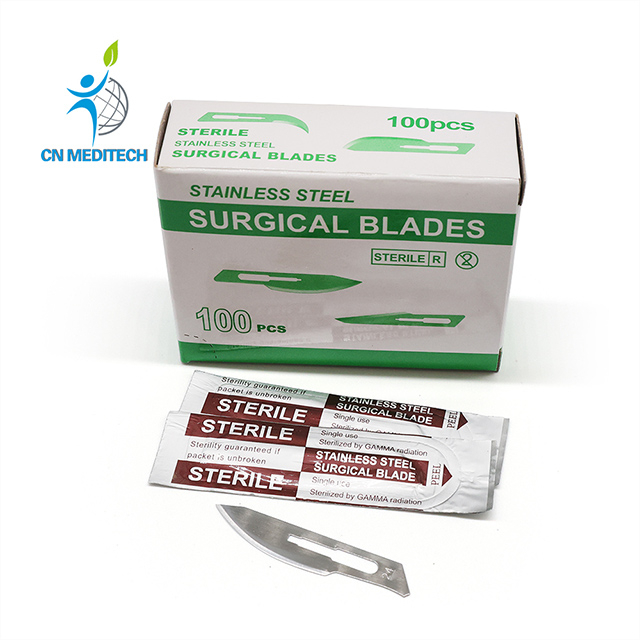
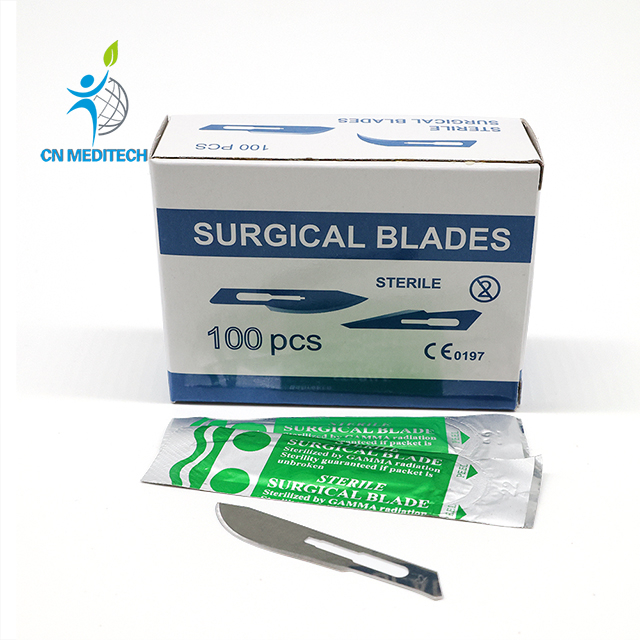
· Multiple scalpel blade specifications: Full availability of standard fitting sizes (e.g., #10, #11, #12, #15, #20, #21, #22, #23, #24) designed to fit standard handles according to ISO 7740 standards.
· Sterile disposable scalpel options: Pre-assembled disposable scalpels with ergonomic plastic handles and protective blade caps for immediate clinical use.
· OEM packaging support: Tailored inner box, pouch, and outer carton branding designed to meet local distributor regulations.
· Bulk supply for distributors: Reliable lead times, optimized shipping configurations, and scalable volume pricing to protect market margins.
· Tender project assistance: Complete documentation packages to support public health tenders and private hospital network bidding.
· Flexible sourcing solutions: A broad portfolio of medical consumables to streamline your procurement logistics under a single trusted supplier.
Whether you are expanding a medical product portfolio or supplying hospitals in your market, we help you find reliable scalpel solutions with consistent quality and competitive supply support.

The choice between stainless steel and carbon steel depends on the primary clinical application and storage environment. Stainless steel is ideal for general surgical environments due to its excellent corrosion resistance, long shelf life, and stable performance across various procedures. Carbon steel provides an exceptionally sharp initial edge preferred by some specialists, but it requires strict moisture-controlled storage to prevent surface oxidation over time.
Not necessarily. Extremely sharp initial edges that lack structural backing can fold, roll, or chip upon encountering dense tissue, rendering the blade dull after a single pass. High quality is defined by edge retention—the ability of a blade to balance high initial sharpness with the micro-structural hardness needed to maintain smooth, consistent cutting performance throughout an entire procedure.
Procurement teams should verify that suppliers adhere to international manufacturing standards (ISO 13485, ISO 7153-1, ISO 7740) and possess valid regulatory approvals (CE, FDA). Additionally, buyers should request sample lots to evaluate batch consistency, edge stability under tissue simulation, foil packaging integrity, and complete batch-traceability documentation.
Yes. Professional medical manufacturers like CN MEDITECH offer comprehensive OEM and ODM services. This includes private label printing on individual foil pouches, customized inner packaging boxes, specialized carton marking, and tailored sterile packaging layouts suited to regional market preferences and regulatory demands.